
Milford Court Docket Searches
If the citation names Mayor's Court, head straight to the Milford Mayor's Court docket search. Coverage there runs from August 29, 2019 forward. You can search by first and last name, case number, case type, or ticket number. Offense-date range and court-date range work too. Each result shows the name, ticket number, offense date, and case number. It also lists the case type and court date. That is enough to locate a Milford docket entry. Keep in mind that a listing never decides what the court will do.
- Read the issuing court, citation number, and date on the Milford notice before choosing a route.
- Use the local Milford search with the most exact information available.
- Match the case type and date to the paper notice before treating a result as the same matter.
- Call the Milford court when no record appears, when a date needs confirmation, or when a document is needed.
- Use the named county or other court if the notice does not identify Milford Mayor's Court.
Note: The Milford interface caps any query at 200 matches. A broad name search may therefore need a date, ticket, or case-number filter to narrow things down.
Milford Court Record Search Fields
Milford does not use Clermont's CourtView system. It runs a city-authorized OhioTicketPayments interface instead. That difference matters. CourtView holds court-specific county files, while the Milford search fields live on the local route. A Milford ticket number is often the sharpest way to narrow a public list. Without one, pair a name with an offense-date or court-date range. Then check every returned field against the citation. The route offers prior and next controls. Those buttons do not prove that every Milford record is online.
| Milford search choice | Useful when | Detail to confirm |
|---|---|---|
| Name | The ticket is not at hand | Name, offense date, and court date |
| Ticket number | The citation identifies a ticket | Ticket and case number together |
| Case number or type | A prior Milford record identifies the case | Type and scheduled date |
| Date range | Several cases share a name | Offense date rather than a guessed date |
Milford's own portal disclaimer states that its record feed comes from the computerized Mayor's Court system. It also says the data should be verified with the court. Treat a public result as a starting point for a Milford record, not an official certification.
Inside the Milford Municipal Court
Milford's local forum is a Mayor's Court, not a municipal court. Ohio Mayor's Courts sit outside the judicial branch. They are not courts of record. Their authority covers local-ordinance matters, parking or standing matters, and qualifying state-highway traffic matters. So the label on a Milford notice is the first routing fact. A ticket written inside the city can still name a different court, and a Milford result cannot replace that court's docket.
The Ohio Supreme Court directory lists Milford Mayor's Court at 745 Center Street, Lower Level, Milford, OH 45150. The listed phone number is 513-248-5084. The court publishes no fine table, public-record form, or separate building page. It posts no regular schedule either. Call the clerk directly rather than guessing at a payment deadline or calendar pattern.
Milford Mayor's Court
745 Center Street, Lower Level
Milford, OH 45150
513-248-5084
Milford Court Records Since 2019
Milford's online docket coverage starts on August 29, 2019. An older Milford case may not appear through the city-authorized interface. The court may still have kept a record of it. Call the Mayor's Court line with the ticket. Ask which record channel applies. Bring the approximate date and any case reference too. Never read a no-result screen as proof that no Milford case exists. An underlying document may still require a direct court request.
Milford was the largest county-part municipality in the Ohio Department of Development's July 1, 2022 table. It listed 6,446 residents in Clermont County. The city crosses county lines, so that figure is not its full population. It does explain why the issuing court and county on a ticket deserve close attention.
Note: A public docket line is only an index of court activity. An official copy or complete file must come from the court that maintains it.
Finding Milford Court Dates
Read your Milford court date first from the citation, summons, or notice. The portal can help locate the stored court date. Beyond that, the Mayor's Court publishes no calendar and no fixed meeting schedule. Before appearing, call Milford Mayor's Court. Compare the clerk's answer with the notice and the portal result. Do this especially after a correction or transfer. Such events may not display right away.
| Ticket number | The local citation reference that can lead to the Milford case entry. |
|---|---|
| Case number | The Mayor's Court identifier shown with a Milford result. |
| Offense date | A way to distinguish similar Milford name results. |
| Court date | The listed setting to confirm with the Milford court. |
| Case type | A category that helps identify the cited matter. |
The word docket can mean a chronological record of events or a daily hearing schedule. Here, the stored court date is just a scheduling clue. It never replaces the notice or clerk confirmation.
Milford Court Record Verification
Milford's online interface is a practical finding tool. The city-linked route itself says its data should be verified with the court. So use exact identifiers. A broad name search can pull up another person. It can also return another ticket or a different case type. A no-result can also follow from the portal's start date. When you need an underlying document, ask the court. Ask what it can provide and what detail it needs to locate the file.
Ohio court access also separates a public view from full access to every paper. Under the statewide rules, remote access does not require every court document to be online. A visible Milford docket line shows that activity occurred. It may not supply the document itself. The court that created the record is the only source for a certified or official copy.
Milford verification point: Match the ticket number, case number, offense date, type, and court date before relying on a public result.
Milford Traffic Ticket Lookups
A ticket that names Milford Mayor's Court belongs in the Milford docket search. Keep the paper citation next to whatever the search returns. The docket entry should list the case number, the case type, and the offense date. It should also show the court date. Milford publishes no official fine schedule and no city payment rule. The citation and the Milford court itself are the only sound sources for what you owe, when to appear, and how soon. Tickets routed to Clermont County Municipal Court travel a different path. That path runs through the court's Criminal-Traffic-Civil CourtView. Not everything lands in a Milford Mayor's Court docket. Juvenile traffic goes to Juvenile Court, never to an adult Mayor's Court search. Matching the ticket to its actual record holder is what makes a local lookup work.
Milford Court Ticket Record Checks
Milford's official city site connects the local docket to its payment interface. What it does not publish is a fine table or a standard payment deadline. That gap makes the ticket itself the key document. Before you pay anything, compare details. Check the court name, ticket number, offense date, and listed court date against the portal entry. If they do not match, call Milford Mayor's Court. A search result never overrides the citation in your hand. The same caution guards against a routing error. A ticket written in Milford can name a different court entirely. A Milford Mayor's Court record can also transfer to Clermont Municipal Court later. So check the court first, then the identifier, then the date. Run the checks in that order. A no-result screen or a payment page stays what it is. It is a screen, not a legal conclusion.
Milford Court Transfers and Appeals
Not every Milford case stays in Mayor's Court. Some matters exceed its limited jurisdiction and must move out. R.C. 1905.032 controls the transfer. It requires certified papers, a transcript, and costs to travel with a qualifying case. Once Clermont Municipal Court receives the file, it becomes a Municipal Court record. Look for it through the Municipal Clerk's channel from that point forward. Appeals take a separate road. Under R.C. 1905.23, written notice of appeal is due within ten days after judgment. The municipal or county court of jurisdiction hears it. That is usually Clermont Municipal Court here in Clermont County. An appeal shifts where the active docket lives. It does not wipe out the original Milford record. That record still exists.
Docket flow: Milford Mayor's Court › Clermont County Municipal Court › Clermont County Court of Common Pleas (General Division)
How Milford Cases Reach the County
Milford cases can be city matters, but some are county-level from day one. Clermont County Municipal Court takes adult traffic, misdemeanors, and OVIs. It also handles small claims, evictions, and municipal civil cases. Its public CourtView search is court-specific. The court warns that recent filings or decisions may not appear right away. Files before May 1, 1996 require a trip to the clerk's office. The Court of Common Pleas, General Division, holds adult felony criminal files. It also holds higher-value general civil records through the Common Pleas clerk. Ohio has no single trial-court portal. No statewide option covers every Clermont file. Search the named court instead of reaching for a statewide catch-all. A Milford docket record can roll up to the county level. It may carry a new court number. It may also carry a fresh case history. The county clerk landing page keeps the systems apart. It sends users to Common Pleas, Municipal, Domestic Relations, Probate, and Juvenile separately. One more thing worth knowing: a transfer is just procedural routing. It is not proof of guilt, liability, or any particular result.
Milford Ten-Day Appeal Records
Ten days is the whole window. After a Milford judgment, written notice of appeal must be filed within ten days. The clock starts at judgment. The deadline is unforgiving. Not every Milford matter is appealable in the same way, though. Hang on to the ticket, the judgment information, and any court receipt. Then ask the Milford clerk or the receiving court which filing path applies. Do not count on a portal screen to calculate an appeal deadline. The Ohio Supreme Court Mayor's Court directory is the official statewide reference for the local court system. Use it to confirm where a Mayor's Court sits, not as a live Milford case register. For records within its stated coverage, look closer to home. The Milford local docket route remains the direct public search channel.
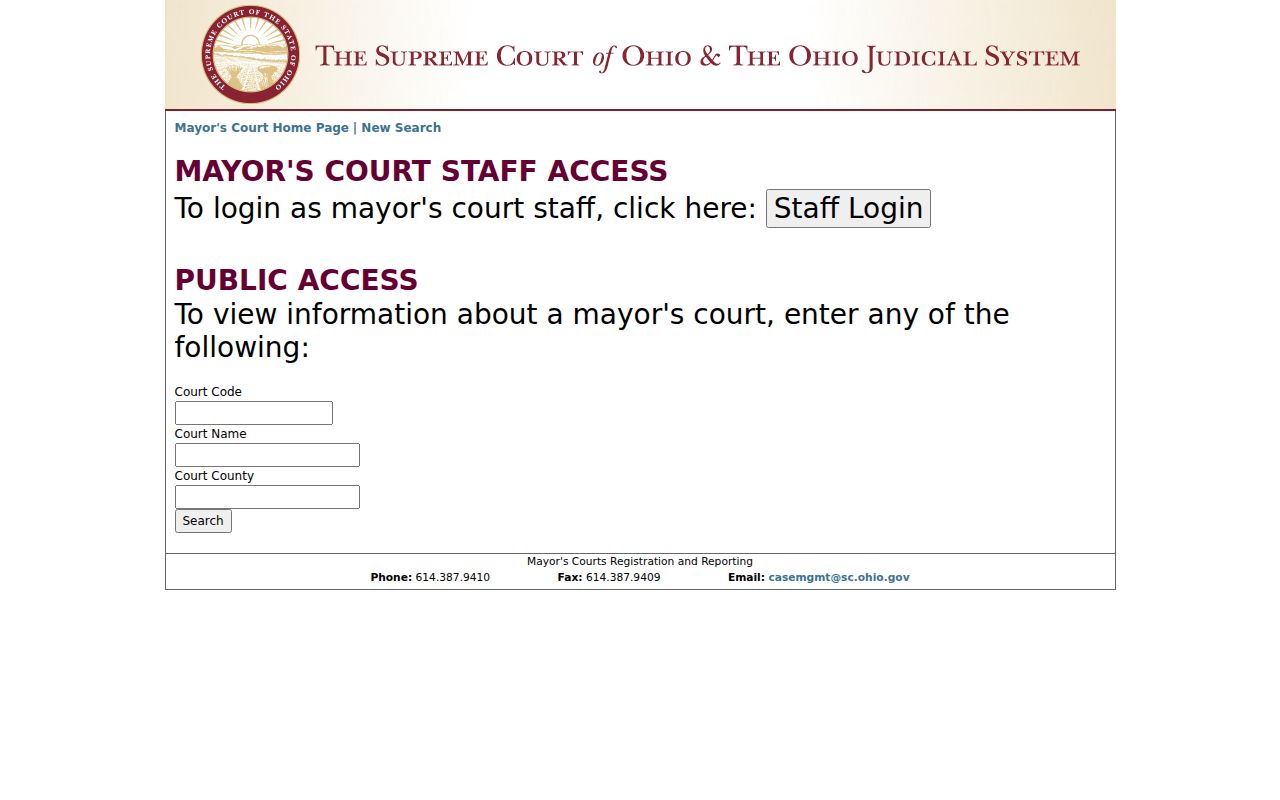
A Milford court record search starts with the issuing local court. That is the lesson of the directory. A general county label will not find what the local docket holds.
Who Can See Milford Court Records
Ohio court-record rules govern who sees a Milford court record, and access has limits. The Public Records Act covers public-office records and local administrative policies. For case files themselves, the Ohio Rules of Superintendence apply. They set the rules for public, direct, and remote access. A docket, index, order, or judgment can be public. Personal identifiers can stay sealed or redacted. So can restricted documents and other protected material. When you ask the Milford court for a record, describe it clearly. The office needs enough detail to find the file. A transferred county case belongs to the receiving clerk. And remember that a portal result is a convenience view, never a certified record.
Key Rules:
Ohio Sup.R. 11.09–11.16 govern court-record access, remote availability, and restrictions.
Ohio Public Records Act, R.C. 149.43 provides inspection and copying rules for public records, subject to exclusions.
R.C. 1905.23 sets the written-notice deadline for a Mayor's Court appeal.
Ohio's appeal statute is the source shown in this official record image.
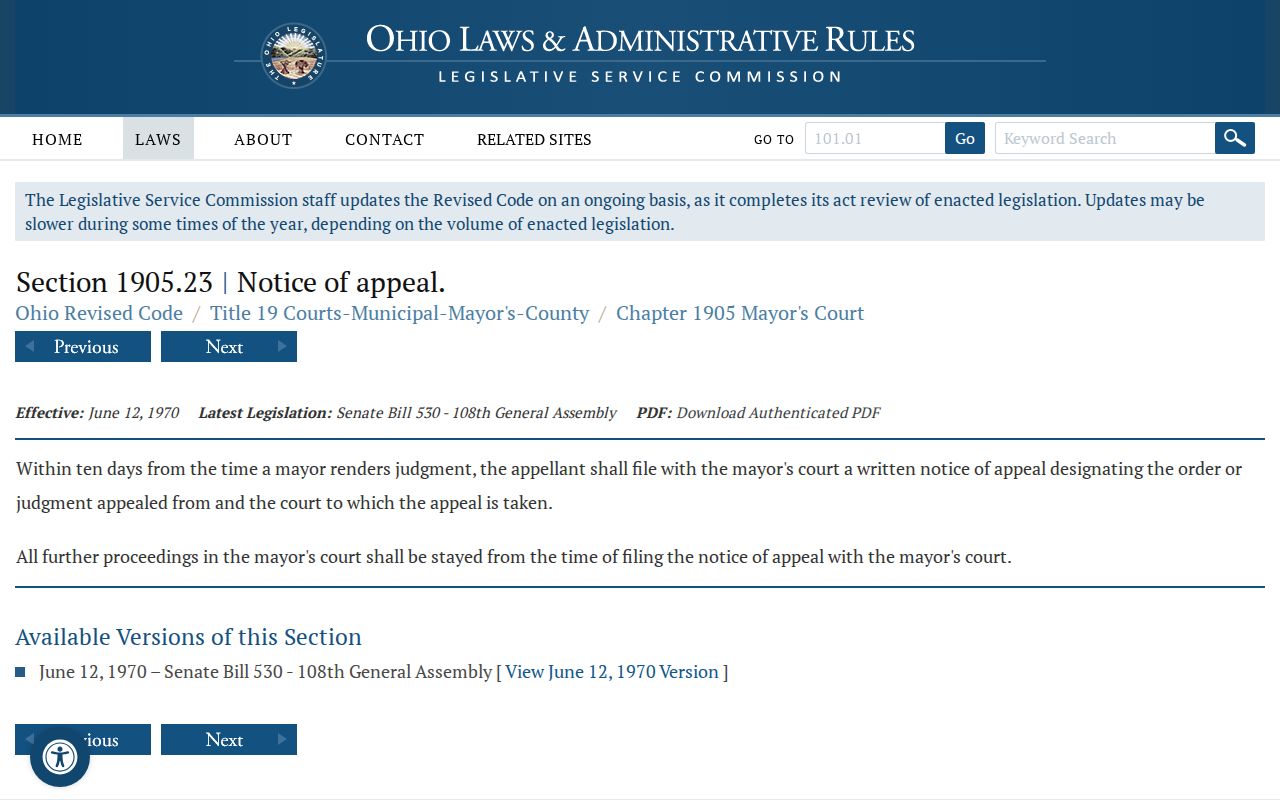
After a written appeal, the statute fixes the route a Milford record can take. For the actual case file, the court or clerk remains the source.